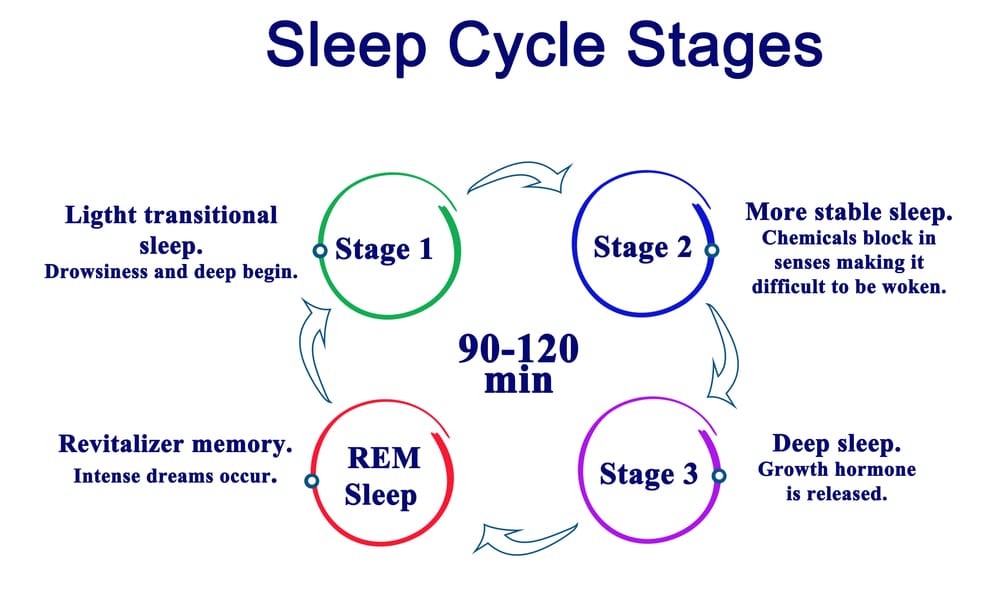

Stages of sleep influence how the brain and body recover, process memories, and fuel tomorrow’s energy. Understanding these silent cycles reveals how much your nights guide your days. Sleep is not one long stretch of unconsciousness; it is a structured progression through predictable phases that repeat several times every night, each with its own purpose in restoring physical and emotional well-being.
Scientists divide sleep into distinct types based on brainwave patterns, muscle tone, and eye movement. These changes help determine whether you are dreaming, repairing muscles, strengthening memory, or simply transitioning deeper into rest. Although we notice none of this while asleep, every shift in the stages of sleep keeps the mind resilient, the body stronger, and health on track.
1 – The Role of Stages of Sleep
Stages of sleep form a nightly roadmap that guides the body from light relaxation into physical repair and dreaming. By cycling between non-rapid eye movement (NREM) and rapid eye movement (REM) sleep, the brain manages essential housekeeping tasks like memory organization, toxin clearing, and mood regulation. The first half of the night is dominated by deeper sleep, while the latter half increases REM periods and vivid dreams.
Without proper cycles of stages of sleep, the body struggles to complete restorative work. Shortened deep sleep may leave muscles unhealed, while reduced REM disrupts memory and emotional stability. The stronger the consistency of these cycles, the better long-term physical and mental performance become.
2 – NREM Sleep
Most of the night occurs in NREM sleep, a period without rapid eye movement where heart rate, breathing, and brain activity slow down. It creates the foundation for physical recovery by reducing energy output and allowing tissues to repair. During NREM phases, the immune system strengthens and metabolic balance improves.
This quiet period allows the body to reset from daytime demands. When NREM sleep is cut short by stress, lifestyle habits, or frequent awakenings, the consequences are often felt the next day as fatigue, soreness, and reduced focus.
3 – Light Sleep (N1)
Light sleep is the doorway from wakefulness into deeper rest. Brainwaves begin to slow, muscle activity shifts downward, and the eyes move gently behind closed eyelids. It usually makes up only a small portion of the night, but it plays an important transition role as the body disconnects from alertness.
Because this stage is shallow, it is the easiest time to wake up. Environmental noises, bedroom disruptions, or stress can cause frequent interruptions, limiting progress toward deeper, more rejuvenating stages.
4 – Transition to Deeper Sleep (N2)
During this next step of the stages of sleep, body temperature drops and heart rate continues falling. Brainwave bursts known as sleep spindles help shield the brain from outside disturbances, protecting sleep and supporting learning. N2 makes up a large portion of a typical night.
Remaining long enough in this stage ensures the brain can gradually separate from external stimuli. When this stage is stable, transitions into slow-wave sleep become smoother, leading to stronger next-day mental clarity.
5 – Deep Sleep (N3)
N3 is the most physically restorative stage. Slow brainwaves dominate, breathing steadies, and the brain becomes harder to wake. Growth hormone peaks, helping tissue repair, muscle recovery, and overall physical rejuvenation. This phase is especially crucial for children and athletes.
After nights with limited deep sleep, the body often feels heavy, sore, or sluggish. Long-term deficits may increase the risk of chronic inflammation and weakened immune responses because crucial repair was skipped.
6 – REM Sleep and Dreaming
REM sleep is the stage most associated with dreaming. Brain activity rises dramatically, almost reaching wakeful levels, but muscles remain temporarily paralyzed to prevent movement during vivid dreams. This is when emotional processing takes center stage.
When this part of the stages of sleep is reduced, emotional regulation suffers. People may feel more stressed, reactive, or forgetful because the brain lacked the opportunity to sort memories and soften unwanted emotional weight.
7 – The Sleep Cycle Repeats
Stages of sleep do not progress once through the night but loop repeatedly in cycles lasting 90 to 120 minutes. Early cycles emphasize deep sleep, while later cycles extend REM periods. Each loop builds on the last, shaping a full spectrum of recovery benefits.
If the night is cut short, the later cycles containing more REM are missed, affecting memory and emotional health. Maintaining a full night’s sleep helps the brain complete every necessary round of restoration.
8 – How Age Influences Sleep Stages
As people age, the structure of stages of sleep gradually changes. Deep sleep decreases, REM periods may shorten slightly, and more time is spent in light sleep. These shifts are natural, though they can make older adults more susceptible to nighttime awakenings.
While the body adapts, prioritizing habits that protect the quality of these stages can help preserve memory and mobility into later years. Even when total deep sleep declines, healthy patterns still promote resilience and vitality.
9 – What Disrupts Stages of Sleep
Stages of sleep are highly sensitive to lifestyle factors. Stress, caffeine, alcohol, and large swings in bedtimes can reduce time spent in deeper and dreaming phases. Sleep disorders such as insomnia or sleep apnea can repeatedly break the cycle, preventing restorative benefits.
When the rhythm becomes fragmented, the body tries to compensate, but the result is often grogginess or mood imbalance. Establishing a steady routine and creating an environment that encourages uninterrupted rest helps safeguard overall health.
Sleep and Memory Consolidation
Another essential function of sleep is strengthening memories. Throughout the stages of sleep, especially during REM and portions of NREM, the brain reorganizes new information and filters what is worth storing. Learning becomes easier when this nightly sorting happens uninterrupted.
By supporting memory consolidation, sleep improves creativity, decision-making, and problem-solving. Even short-term sleep disruptions can weaken recall, which is why students and working professionals benefit from protecting their sleep time.
Emotional Regulation During Sleep
Beyond memory, sleep plays a critical role in emotional resilience. REM patterns help the brain process experiences and reduce the intensity of stressful memories. People often wake with a refreshed perspective after the brain has smoothed emotional edges overnight.
Chronic interference with this subtle emotional maintenance may increase anxiety and irritability. Protecting stable sleep cycles supports mental balance and gives the mind tools to cope with daily challenges.
The Body’s Nightly Restoration
During the stages of sleep, the nervous system resets signals that control appetite, metabolism, and inflammation. Blood pressure drops, allowing the cardiovascular system to recover. Muscles repair micro-damage from physical activity, and the endocrine system balances hormone production.
These functions work silently every night, but when sleep quality declines, the effects build over time. Healthy sleep is one of the strongest predictors of long-term wellness, making consistency as important as the number of hours spent asleep.
Healthy Sleep Habits for Better Cycles
Building routines that protect the stages of sleep begins with consistent bed and wake times. A cool, quiet, and dark environment promotes progress into deeper phases, while limiting screens and stimulants before bed reduces nighttime interruptions.
Strong habits allow the body to anticipate rest, making each transition between stages smoother. Improving sleep quality amplifies resilience, supports physical recovery, and enhances overall life performance.
References
[1] https://www.ncbi.nlm.nih.gov/pmc/articles/PMC6289075/
[2] https://www.ncbi.nlm.nih.gov/books/NBK549788/
[3] https://pubmed.ncbi.nlm.nih.gov/27710788/